A ranked guide to the best cities for Canadian remote workers abroad, with monthly costs in CAD, visa rules for Canadian passport holders, internet speeds, time zone compatibility, and coworking options across 8 destinations from Lisbon to Oaxaca.
title: "8 Best Digital Nomad Destinations for Canadians in 2026" description: "A ranked guide to the best cities for Canadian remote workers abroad, with monthly costs in CAD, visa rules, internet speeds, and time zone compatibility." persona: Alex — The Slowmad content_type: Comparison / Listicle last_updated: April 2026
8 Best Digital Nomad Destinations for Canadians in 2026
A Canadian remote worker can live well in Lisbon for $2,400–$3,200 CAD/month, Mexico City for $1,800–$2,600 CAD, or Chiang Mai for $1,400–$2,000 CAD, all while keeping reasonable overlap with Eastern or Pacific time zones. Canadian passport holders can enter all eight destinations on this list visa-free for at least 30 days, and several offer digital nomad visas for stays of 6–12 months. Flights from Toronto (YYZ) or Vancouver (YVR) to these cities typically run $500–$1,200 CAD return depending on season and routing.
This guide ranks the eight best cities for Canadians who want to work abroad in 2026, based on cost of living in CAD, internet reliability, time zone overlap with Canadian business hours, visa accessibility, and quality of the remote work infrastructure (coworking spaces, cafes with WiFi, nomad community).
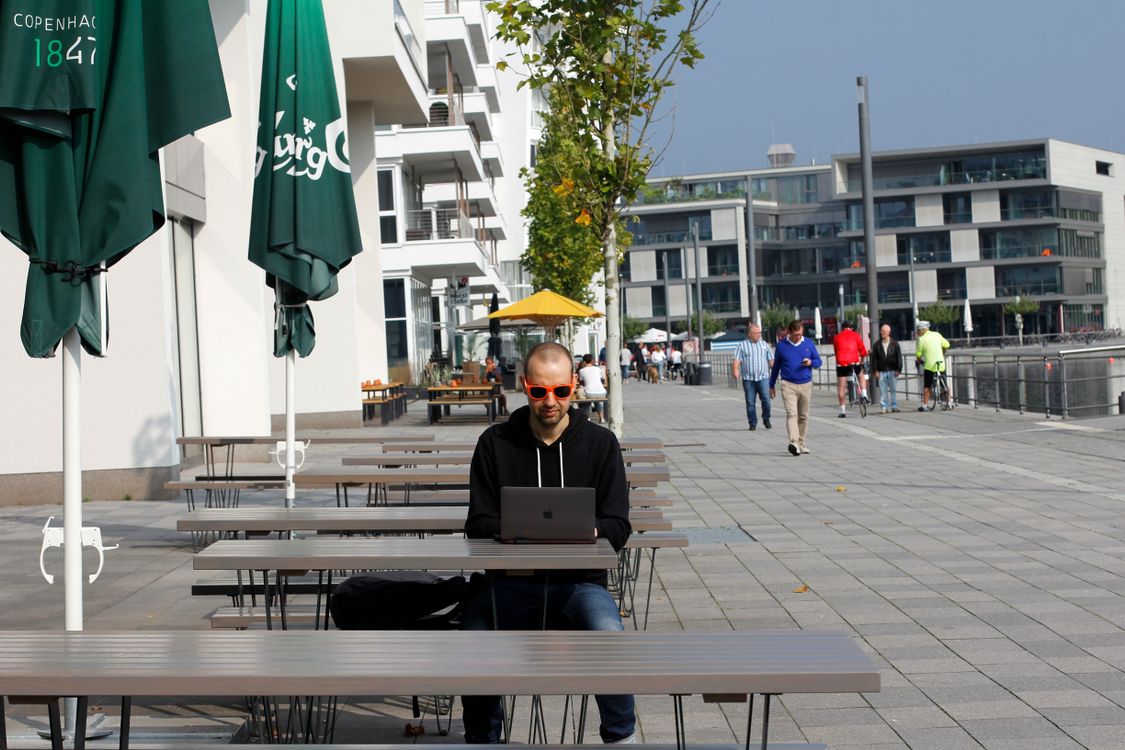
Photo on Pexels — free to use
Summary Table
| Destination | Monthly Cost (CAD) | Flight from YYZ/YVR | Time Zone vs. ET | Visa-Free Stay | Internet Speed | Best For | |---|---|---|---|---|---|---| | Lisbon, Portugal | $2,400–$3,200 | $550–$900 return | +5 hours | 90 days (Schengen) | 100+ Mbps | European base, walkability | | Mexico City, Mexico | $1,800–$2,600 | $400–$700 return | –1 hour (CT) | 180 days | 50–100 Mbps | Time zone, food, culture | | Medellín, Colombia | $1,600–$2,400 | $450–$800 return | Same as ET | 90 days | 30–80 Mbps | Climate, affordability | | Chiang Mai, Thailand | $1,400–$2,000 | $800–$1,200 return | +11 hours | 60 days | 50–100 Mbps | Lowest cost, nomad community | | Buenos Aires, Argentina | $1,500–$2,200 | $700–$1,100 return | +1 hour | 90 days | 30–70 Mbps | Culture, exchange rate | | Barcelona, Spain | $2,800–$3,800 | $550–$950 return | +6 hours | 90 days (Schengen) | 100+ Mbps | Lifestyle, beaches, transit | | Bali, Indonesia | $1,500–$2,400 | $900–$1,400 return | +12 hours | 30 days (extendable) | 20–60 Mbps | Nature, community, cost | | Oaxaca, Mexico | $1,400–$2,000 | $500–$850 return | –1 hour (CT) | 180 days | 30–60 Mbps | Food, slower pace, cost |
1. Lisbon, Portugal
Lisbon is the most popular European base for Canadian remote workers, and for good reason. A one-bedroom apartment in the Alfama or Graça neighbourhoods runs $1,200–$1,800 CAD/month on a monthly rental. Fibre internet is standard across the city. 200+ Mbps connections are common even in older buildings. The nomad infrastructure is deep: coworking spaces like Second Home Lisboa, Outsite Lisbon, and Hana Lisbon dot the central neighbourhoods, and half the cafes in Príncipe Real have outlets at every table.
Flights from Toronto (YYZ) to Lisbon (LIS) run $550–$900 CAD return on Air Transat or TAP Air Portugal, with shoulder season sales occasionally dropping to $400–$500. From Vancouver (YVR), expect $750–$1,100 with a connection through YYZ or a European hub on KLM or Lufthansa.
The time zone gap is real. Lisbon is 5 hours ahead of Eastern Time, so a 9 AM Toronto standup happens at 2 PM local. Workable, but your evenings start late. Canadian passport holders get 90 days visa-free under the Schengen agreement. Portugal's D8 Digital Nomad Visa (renewable, 1 year) requires proof of $3,800 CAD/month income.

Photo by craveiro_ pics on Pexels — free to use
The catch: Lisbon's popularity has pushed rental prices up 40% since 2022. Finding a good monthly rental under $1,500 CAD in the centre takes effort and advance booking. Expect $1,600–$1,800 if you want a furnished place in Príncipe Real or Chiado. The food and transport stay cheap ($15–$25 CAD/day for meals, $55 CAD/month metro pass), but housing eats the budget.
Browse Lisbon monthly stays on Booking.com
2. Mexico City, Mexico
Mexico City is the top pick if time zone matters. At UTC-6 (Central Time), you're only one hour behind Toronto and two behind Halifax. A 9 AM ET call is 8 AM in CDMX. That alone makes it the easiest destination on this list for syncing with Canadian teams.
Flights from Toronto (YYZ) to Mexico City (MEX) cost $400–$700 CAD return on Aeromexico, Air Canada, or WestJet (seasonal). From Vancouver (YVR), $500–$800 with a connection. Flight time is roughly 5 hours direct from YYZ.
A furnished one-bedroom in Roma Norte or Condesa — the two neighbourhoods every nomad gravitates toward — runs $1,000–$1,600 CAD/month. Coworking options include WeWork (multiple locations), Homework Condesa, and Público Cowork in Roma. The cafe scene is enormous; places like Quentin Café, Almanegra Café, and Blend Station are nomad staples with fast WiFi and good coffee.
Canadians get 180 days visa-free on arrival. Six months, no visa application, no extension hassle.
The catch: Air quality. Mexico City sits in a valley at 2,240 metres elevation, and smog days happen, especially in the dry season (November–May). If you have respiratory sensitivities, check the air quality index before committing to a long stay. Also, internet in older buildings can be inconsistent. Confirm the connection speed before signing a monthly rental.
Find the best YYZ→MEX fares on Expedia
3. Medellín, Colombia
Medellín shares Eastern Time (UTC-5), so there's zero time difference with Toronto. Your calendar stays exactly as it would at home. The city's El Poblado neighbourhood is the default nomad base, with a concentration of coworking spaces (Selina Medellín, WeWork Medellín, Tinkko) and restaurants within walking distance.
Flights from Toronto (YYZ) to Medellín (MDE) run $450–$800 CAD return on Avianca or with connections through Bogotá (BOG) on Air Canada/Avianca codeshares. Direct flights are rare from Canadian airports; most routes connect through BOG, Miami (MIA), or Fort Lauderdale (FLL).
A furnished apartment in El Poblado or Laureles costs $800–$1,400 CAD/month. Groceries, dining, and transport are where the savings really stack up: $12–$20 CAD/day covers meals comfortably, and the Medellín Metro costs under $2 CAD per ride. Total monthly cost lands around $1,600–$2,400 CAD.
Canadians get 90 days visa-free, extendable once for another 90 days at a local Migración Colombia office.
The catch: Internet reliability is improving but uneven. El Poblado and Laureles have solid fibre options (50–80 Mbps), but outages happen more frequently than in Lisbon or Mexico City. Always have a backup: a Colombian SIM with a Claro data plan (roughly $25 CAD/month for 30 GB) is essential. Also, the rainy season (April–May and September–November) means afternoon downpours almost daily.
Browse Medellín monthly stays on Booking.com
4. Chiang Mai, Thailand
Chiang Mai is the original digital nomad city, and it's still the cheapest option on this list. A furnished studio or one-bedroom in Nimman or the Old City runs $500–$900 CAD/month. A full meal at a local restaurant costs $3–$5 CAD. Coworking spaces like Punspace, CAMP (at Maya Mall, free), and Hub53 charge $100–$200 CAD/month for a dedicated desk.
The problem is the clock. Chiang Mai is UTC+7, which puts it 11 hours ahead of Eastern Time and 14 ahead of Pacific. A 9 AM Toronto call is 8 PM in Chiang Mai. If your team is flexible or you work async, this is manageable. If you need real-time overlap during Canadian business hours, you're working evenings.
Flights from Vancouver (YVR) to Chiang Mai (CNX) cost $800–$1,200 CAD return with one or two stops, typically through Bangkok (BKK) on carriers like Air Canada + Thai Airways, or Cathay Pacific via Hong Kong (HKG). From Toronto (YYZ), add $50–$150 CAD and another connection.
Canadians get 60 days visa-free (extended from 30 days in 2024). Thailand also offers a Long-Term Resident visa and a new Digital Nomad visa (DTV) for stays up to 180 days, though income requirements are higher ($65,000+ CAD/year).
The catch: Burning season. From late February through April, agricultural burning in northern Thailand tanks the air quality. The AQI regularly hits 150–300+ during this period. Chiang Mai in March is rough on the lungs. Plan around it: arrive in November, leave by mid-February, or come back in May.
Find the best YVR→CNX fares on Expedia
5. Buenos Aires, Argentina
Argentina's economic situation is a Canadian remote worker's friend. The peso's steep devaluation means your CAD stretches absurdly far. A stylish one-bedroom apartment in Palermo or San Telmo costs $600–$1,000 CAD/month. A steak dinner with wine: $12–$18 CAD. Monthly cost all-in hovers at $1,500–$2,200 CAD.
The time zone is ET+1 (UTC-3), so Buenos Aires is only one hour ahead of Toronto. Close enough that most meetings work without any schedule contortion.
Flights from Toronto (YYZ) to Buenos Aires (EZE) run $700–$1,100 CAD return on Aerolíneas Argentinas, LATAM, or Air Canada (seasonal). Flight time is 11–13 hours with a connection, usually through São Paulo (GRU) or Lima (LIM). Direct flights from Canada don't exist.
Coworking spaces include WeWork (multiple locations in Palermo), Urban Station, and AreaTres. Buenos Aires cafe culture is strong, but most traditional cafes don't have WiFi, so the coworking route is more reliable for work.
Canadians get 90 days visa-free, renewable by doing a border run to Uruguay (a $15 CAD ferry ride to Colonia del Sacramento).
The catch: Two things. First, the payment ecosystem is confusing. Official exchange rates, blue dollar rates, and crypto rates all coexist. You'll want to bring USD cash and exchange at "cuevas" (informal exchanges) for the best rate, then use your CAD to buy USD before flying. Second, inflation runs 100%+ annually, which means prices in pesos change monthly. Budget in CAD, not in pesos.
Browse Buenos Aires monthly stays on Booking.com
6. Barcelona, Spain
Barcelona is the premium option on this list. You pay more, but you get Mediterranean beaches, a metro and bus system that actually works, 300+ days of sunshine, and a city that genuinely works as both a place to live and a place to explore on weekends.
A one-bedroom in Gràcia, Eixample, or El Born runs $1,500–$2,200 CAD/month, substantially more than Latin America, but comparable to renting in downtown Vancouver. Food and transport are reasonable: $20–$30 CAD/day for meals, $65 CAD/month for a T-Casual transit pass.
Flights from Toronto (YYZ) to Barcelona (BCN) cost $550–$950 CAD return on Air Transat (seasonal direct), Vueling, or Air Canada/Iberia with a Madrid (MAD) connection. From Vancouver (YVR), $700–$1,100 with connections through European hubs.
Barcelona is UTC+1 (CET), putting it 6 hours ahead of Eastern Time. A 9 AM Toronto standup is 3 PM local. That's tighter than Lisbon but still workable if you shift your day slightly.
Coworking is everywhere: MOB Barcelona, Aticco, Itnig, and OneCoWork have locations across the city. The nomad community is large and well-organized.
Canadians get 90 days visa-free under Schengen. Spain offers a Digital Nomad Visa (up to 1 year, renewable) requiring proof of roughly $4,200 CAD/month income and a clean criminal record.
The catch: Barcelona's short-term rental laws are tightening. The city has been cracking down on tourist apartments since 2024, and monthly rentals through platforms like Airbnb are harder to find legally. Plan to use local rental sites (Idealista, Spotahome) or coliving operators like Sonder or Selina to stay compliant. Rents have climbed 20%+ in popular neighbourhoods since 2023.
Find the best YYZ→BCN fares on Expedia
7. Bali, Indonesia
Bali's Canggu area has become the global nomad cliché for a reason: the combination of $1,500–$2,400 CAD/month all-in costs, a deep coworking infrastructure, and the "work from a rice terrace" lifestyle is hard to replicate anywhere else. Dojo Bali, Outpost Canggu, and BWork Bali are the main coworking spaces, and dozens of cafes (Crate Cafe, Hungry Bird, Sensorium) cater to the laptop crowd.
Flights from Vancouver (YVR) to Bali's Ngurah Rai Airport (DPS) cost $900–$1,400 CAD return with one or two stops, typically via Singapore (SIN), Hong Kong (HKG), or Kuala Lumpur (KUL) on airlines like Cathay Pacific, Singapore Airlines, or AirAsia for the budget-conscious. From Toronto (YYZ), $1,000–$1,500.
A villa or apartment in Canggu runs $600–$1,200 CAD/month. Meals: $5–$10 CAD at local warungs, $12–$20 at Western-oriented cafes. A scooter rental (the primary transport) costs $80–$120 CAD/month.
Canadians get 30 days visa-free, or a 60-day visa-on-arrival ($50 CAD) extendable once for another 30 days. For longer stays, Indonesia's B211A social/cultural visa allows up to 180 days with a sponsor.
The catch: The time zone is brutal. Bali is UTC+8, putting it 12 hours ahead of Eastern Time and 15 ahead of Pacific. You're working Canadian hours in the middle of the night. This only works if your role is fully async. Also, internet speeds are the weakest on this list. WiFi at cafes ranges from decent (20–40 Mbps) to painful (5 Mbps). A dedicated fibre connection at your villa is worth the extra $30–$50 CAD/month.
Browse Bali monthly stays on Booking.com
8. Oaxaca, Mexico
Oaxaca is Mexico City's quieter, cheaper, more food-obsessed sibling. If CDMX feels too big and you want a slower pace with the same time zone advantages, Oaxaca de Juárez is worth the look.
Flights from Toronto (YYZ) to Oaxaca (OAX) cost $500–$850 CAD return, usually connecting through Mexico City (MEX) on Aeromexico or VivaAerobus. Direct flights from Canada don't exist; the MEX connection adds 2–3 hours. From Vancouver (YVR), $600–$950.
A furnished one-bedroom in the Centro Histórico or Jalatlaco neighbourhood costs $700–$1,200 CAD/month. The food is absurdly good and absurdly cheap. A tlayuda from a market stall is $3–$4 CAD, a full sit-down meal at a mid-range restaurant like Zandunga or Los Danzantes is $15–$25 CAD. Monthly all-in cost: $1,400–$2,000 CAD.
Coworking is more limited than in Mexico City but growing: Convivio, Impact Hub Oaxaca, and a handful of cafe-coworks serve the nomad crowd. The WiFi at most cafes is adequate (15–30 Mbps) but not blazing.
Same visa rules as Mexico City: 180 days visa-free for Canadians.
The catch: Oaxaca is smaller and less cosmopolitan than the other cities on this list. The expat/nomad community is tight but thin. If you need a large English-speaking social scene or want nightlife beyond mezcal bars and courtyard restaurants, you'll feel the limits within a month. Internet in older colonial buildings can be shaky. Test before you commit to a rental.
Find the best YYZ→OAX fares on Expedia
How We Ranked These Destinations
This ranking weighs five factors equally, scored from a Canadian remote worker's perspective:
- Monthly cost in CAD: total budget including rent, food, transport, coworking, and incidentals, benchmarked against typical Canadian remote worker salaries ($60,000–$110,000 CAD/year)
- Time zone overlap: hours of overlap with Eastern Time (ET) and Pacific Time (PT) during a standard 9 AM–5 PM Canadian workday
- Internet reliability: typical download speeds at coworking spaces and apartments, plus backup options (mobile data)
- Visa accessibility for Canadians: visa-free duration, extension options, and digital nomad visa availability for Canadian passport holders
- Remote work infrastructure: density and quality of coworking spaces, cafe WiFi culture, nomad community size
Prices reflect typical ranges as of early 2026, based on Numbeo cost-of-living data, Booking.com/Airbnb monthly rental listings, and coworking space published rates. Flights are based on historical fare data from YYZ and YVR across multiple seasons.
Frequently Asked Questions
Do Canadians need a visa to work remotely from Portugal?
Canadian passport holders can enter Portugal (and the Schengen area) visa-free for up to 90 days within any 180-day period. For longer stays, Portugal's D8 Digital Nomad Visa allows remote workers to live in Portugal for up to 1 year (renewable) if they can prove a minimum monthly income of roughly $3,800 CAD. The application is submitted through the Portuguese consulate in Ottawa or Toronto.
What's the cheapest digital nomad destination from Canada?
Chiang Mai, Thailand and Oaxaca, Mexico are the cheapest options, both coming in at $1,400–$2,000 CAD/month all-in. Chiang Mai edges ahead on accommodation costs ($500–$900 CAD/month for a furnished apartment), while Oaxaca wins on food value and time zone convenience for Canadian teams.
Which destination has the best time zone for working with a Canadian team?
Medellín, Colombia is the only city on this list in the same time zone as Toronto (ET, UTC-5). Mexico City and Oaxaca are one hour behind ET (Central Time), making them the next best options. Buenos Aires is one hour ahead of ET. All four keep you within a one-hour offset of most Canadian offices.
How long can Canadians stay in Mexico without a visa?
Canadians can stay in Mexico for up to 180 days on a tourist permit (FMM), issued at the border or airport on arrival. No visa application is required. This is the longest visa-free stay of any destination on this list and makes Mexico City and Oaxaca particularly practical for extended remote work stays.
Is the internet reliable enough in Southeast Asia for video calls?
In Chiang Mai, yes. Coworking spaces like Punspace and CAMP deliver 50–100 Mbps consistently, and apartment fibre connections are common and affordable. Bali is more variable: coworking spaces like Dojo and Outpost maintain strong connections (40–80 Mbps), but cafe and villa WiFi can be unreliable. For either destination, a local SIM card with a generous data plan ($15–$25 CAD/month) is a non-negotiable backup.
Can Canadians open a bank account abroad as a digital nomad?
In most cases, no. Not easily. Portugal allows it with a NIF (tax ID number), which you can obtain as a non-resident. Argentina lets you open a peso account but it's not practical for holding CAD. For most destinations, the better strategy is to use a Wise multi-currency account (Canadian-issued) and a no-foreign-transaction-fee credit card (Scotiabank Passport Visa Infinite or HSBC World Elite are popular choices among Canadian nomads).
What's the best time of year to fly from Canada to Europe for remote work?
Shoulder season flights from Toronto (YYZ) to Lisbon (LIS) or Barcelona (BCN) are cheapest in November, early February, and late April–May. Expect $550–$750 CAD return on Air Transat, TAP Air Portugal, or Vueling during these windows. Peak summer (June–August) and Christmas push fares to $800–$1,100+. For remote work, arriving in September or October gives you warm weather, lower rents, and cheaper flights.
Current Deals from Canada
Check the latest flight deals from Canadian airports to all destinations on this list:
→ View current deals from YYZ on FareNorth → View current deals from YVR on FareNorth → View current deals from YUL on FareNorth → View current deals from YYC on FareNorth
Last updated: April 2026
FareNorth earns a commission on bookings made through links on this page, at no extra cost to you.
Image credits: