Working remotely from Barcelona as a Canadian: visa rules, monthly costs in CAD, internet speeds, best neighbourhoods, coworking spaces, and how to make the Spain Digital Nomad Visa work if you stay longer than 90 days.
I'll say this upfront because most nomad blogs won't: Barcelona is louder, denser, and more touristed than Lisbon. The trade-off is that it has a real tech scene (the 22@ district was purpose-built for it), better food breadth, and the beach is a 15-minute metro ride from most coworking spaces. If you want a city that's still a city while you work, this one delivers. Here's what you actually need to know before booking.

Quick Facts
| Detail | Info |
|---|---|
| Capital region | Barcelona (capital of Catalonia, Spain) |
| Currency | Euro (EUR). $1 CAD typically buys around €0.65–€0.70 |
| Time zone | CET (UTC+1) / CEST (UTC+2) in summer |
| Visa for Canadians (short stay) | Not required for stays under 90 days in 180 (Schengen) |
| Visa for Canadians (long stay) | Spain Digital Nomad Visa — €2,849/month gross income minimum |
| Best months for remote workers | April–June and September–October (mild, fewer tourists, lower rents) |
| Avg flight from YYZ | $700–$1,050 CAD return (shoulder); $950–$1,400 CAD summer |
| Avg flight from YVR | $850–$1,250 CAD return (one stop via YYZ or a European hub) |
| Avg daily budget (CAD) | $85–$135/day (accommodation + food + transport + coworking) |
| Internet speed | 300–1,000 Mbps fibre common in apartments; 100–300 Mbps in coworking |
| Languages | Catalan and Spanish (English widely spoken in tech and tourist areas) |
Getting There from Canada
Direct flights from Toronto (YYZ) to Barcelona (BCN) run year-round on Air Canada and seasonally on Air Transat. Flight time is roughly 7 hours 45 minutes eastbound and 8.5 hours westbound. Return fares typically range from $700–$1,050 CAD in shoulder season (April–May, September–October) and climb to $950–$1,400 CAD in June–August. Air Canada operates the route with a Boeing 777 and runs year-round; Air Transat ramps up frequency from spring through fall.
From Montreal (YUL), Air Canada Rouge flies direct seasonally (typically May–October), and Level has run seasonal direct service. Fares mirror YYZ pricing and occasionally dip $50–$100 cheaper if booked early.
From Vancouver (YVR), there's no nonstop. You'll connect through YYZ, Montreal, or a European hub like London Heathrow (LHR), Frankfurt (FRA), or Amsterdam (AMS). Expect $850–$1,250 CAD return. KLM via AMS and Lufthansa via FRA are usually the best-priced options if Air Canada's YYZ connection adds a long layover.
From Calgary (YYC), you're connecting too, usually through YYZ, FRA, or LHR. Budget $900–$1,300 CAD return.
The catch: Summer is brutal for prices. Demand for European travel from Canada hasn't cooled since 2023, and Barcelona is one of the top three Spanish destinations for Canadians. Booking 8–12 weeks out for shoulder season is the sweet spot. For July–August departures, 4–5 months ahead. Also: the BCN-El Prat customs line can be 60–90 minutes in summer if you land midday. Aim for an early morning or late evening arrival.
Find the best YYZ→BCN fares on Expedia
Best Time to Visit (for Remote Workers)
April–June is the prime window. Tourist crowds are present but not yet suffocating, monthly rents are 15–25% lower than peak summer, daytime temps sit at 18–26°C, and the patios are usable. June starts pulling in more tourists, especially around Sónar (electronic music festival, mid-June) and Primavera Sound (late May/early June), so book accommodation early if you're targeting those dates.
September–October is the other money window. Rents start dropping after August's peak, the Mediterranean is still warm enough to swim, locals come back from their summer escapes, and the city feels lived-in again rather than overrun. Bars and coworking events pick up after the August dead zone.
July–August is the season I'd skip if you have a choice. Rents jump 35–60%, central Eixample fills with day-trippers from cruise ships, A/C becomes non-negotiable (and not every Airbnb has it), and temperatures sit at 28–34°C with high humidity. Many local restaurants and small businesses close for two to three weeks in August. The beach is packed by 9 a.m.
November–March is cheap and quiet. Rents are at their lowest, the city is full of locals, and you'll get long stretches of working weather without distraction. The downside: it rains, sunset is at 5:45 p.m. in December, and the social scene contracts. If you're heads-down on a deadline, this is the call. If you want to meet other nomads, wait for spring.
Where to Stay
Hotels burn through your budget fast in Barcelona. For a month or longer, here's how the neighbourhoods break down for remote workers.
Eixample (Dreta or Esquerra). The default pick. Wide grid streets, easy metro access, dense with cafes and restaurants, walkable to everything. Dreta de l'Eixample (east side, around Passeig de Gràcia) is more polished and pricier; Esquerra (west, around Sant Antoni) is more local and 15–20% cheaper. Furnished studios: $1,400–$2,000 CAD/month. One-bedroom flats with kitchen: $1,900–$2,800 CAD/month.
Gràcia. Bohemian, low-rise, lots of plaças where locals actually hang out. Slightly removed from tourist circuits but well-connected by metro. Best fit if you want to feel like you live somewhere, not just visit. Furnished studios: $1,200–$1,800 CAD/month.
Poblenou. Barcelona's tech district (the "22@" innovation zone), with coworking spaces packed in alongside repurposed factory lofts and a beach two blocks away from most of it. If your work life is your social life, this is it. Furnished studios: $1,300–$1,900 CAD/month. Quieter than central Barcelona at night, which some people love and some find dull.
Sant Antoni. South of Eixample Esquerra. Solid food scene built around the renovated Sant Antoni Market, a 10-minute walk to Plaça d'Espanya, and noticeably cheaper than Eixample proper. Studios: $1,100–$1,600 CAD/month.
Coliving options. The Social Hub Barcelona in Poblenou combines a hotel, coworking, and coliving in one building. Private rooms run roughly $1,800–$2,500 CAD/month with gym and rooftop pool included. Outsite Barcelona in Poblenou offers private rooms from about $1,500 CAD/month with coworking included. Sun and Co. runs occasional Barcelona programs. Coliving costs more than a private flat, but you skip the furniture-and-utility hassle and have a built-in social circle on day one.
The catch: Barcelona passed strict short-term rental rules in 2024–2025 to push back against over-tourism, including a planned phase-out of tourist-licence apartments by 2028. The legal long-term rental market has tightened; some Airbnbs that used to operate are now grey-area listings that can vanish on you. Stick to platforms like Flatio, Spotahome, or Blueground for mid-term stays. They handle licensed long-stay properties and rates are often 20–30% better than Airbnb monthly.
Browse Barcelona monthly stays on Booking.com
Internet and Coworking
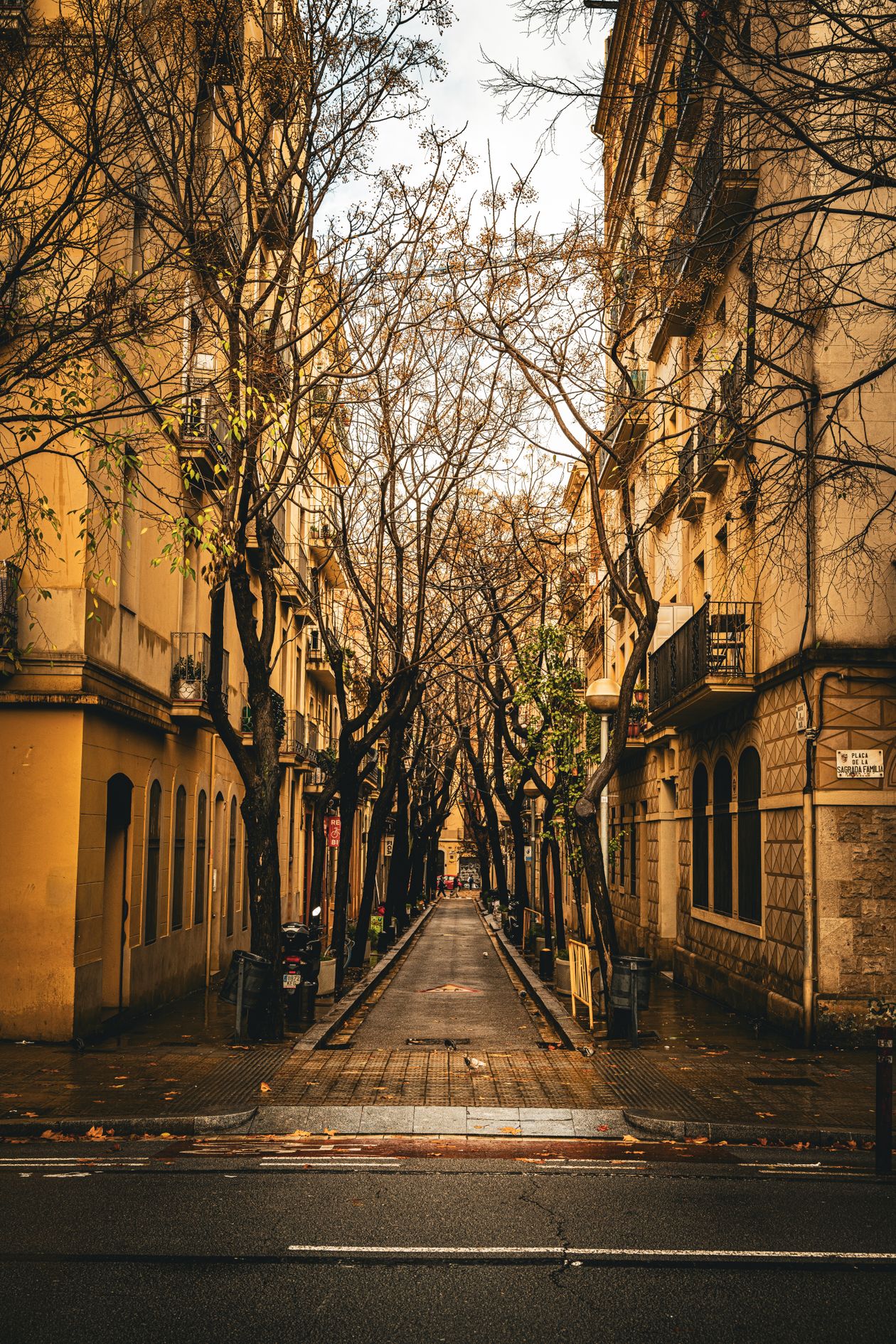
Barcelona's internet is excellent. Fibre is the standard, not the exception. Most apartments come with 300–1,000 Mbps from Movistar, Vodafone, or Orange. If you're booking a longer Airbnb or Flatio, ask the host for a current speed-test screenshot before paying. Anything above 200 Mbps is overkill for video calls; under 50 Mbps with multiple devices on the same WiFi can get sluggish.
Coworking spaces (the ones I'd actually use):
- Aticco (Eixample Dreta, Gràcia, and Poblenou): probably the best-known chain. Monthly hot desk from about €220 (≈$330 CAD), dedicated desk from €350 (≈$525 CAD). Good for community events and reliable WiFi. The Eixample Dreta location is in a Modernist building with a rooftop terrace.
- Talent Garden Barcelona (Poblenou, 22@ district): tech-focused, big space, on-site cafe and garden. Monthly hot desk around €250–€280 (≈$375–$420 CAD). Best fit if you're in tech or want to be around startup people.
- The Social Hub Barcelona (Poblenou): if you're staying in the coliving, coworking is included. Day passes available for around €25 ($37 CAD).
- OneCoWork (multiple central locations including Plaça Catalunya and Marina Port Vell): clean, professional, fast WiFi, easy day passes around €25–€30 ($37–$45 CAD).
- Cloudworks (Eixample, Sant Cugat, others): more business-y feel, dedicated desks from about €290 ($435 CAD)/month.
- La Fàbrica &Co (Poblenou): a converted factory with about 2,000 m² of communal space. Creative-leaning crowd. Monthly memberships from about €230 ($345 CAD).
Cafe working: Less of a default culture than Lisbon. Barcelona cafes are more turnover-focused and some get fussy about laptops at peak hours. But it works at the right spots. Federal Cafe (Sant Antoni and Gòtic locations) is the classic. Satan's Coffee Corner (Gòtic and Poblenou) has solid WiFi and a no-nonsense vibe. Nømad Coffee Lab in Born is small but workable in off-hours. Espresso typically runs €1.20–€1.80 ($1.80–$2.70 CAD). Tip: avoid the lunch rush (1:30–3 p.m.), that's when staff want the tables back.
SIM card: Pick up a prepaid Orange Holiday or Vodafone Yu SIM at El Prat or any Orange/Vodafone shop in the city. A 30 GB plan with calls runs roughly €20–€30 ($30–$45 CAD) for a month. Useful as a hotspot backup if your apartment WiFi flakes out.
The catch: Coworking gets booked up fast in spring and fall. If you're targeting a specific space like Aticco Eixample or Talent Garden, reserve at least 2–3 weeks ahead. Walk-in availability shrinks dramatically in May–June and September–October.
What to Do (When You're Not Working)
Barcelona doesn't need a sales pitch. But here's what makes it work for a month-plus stay, not just a long weekend.
- Walk the Gothic Quarter and El Born early or late. Both are lovely, both are mobbed midday. Go at 8 a.m. on a weekday or after 9 p.m. and they're a different city. The streets between Plaça del Pi and Santa Maria del Mar are the best loop.
- Take the beach commute seriously. Bogatell and Mar Bella, north of Barceloneta, are quieter and have better sand. From most Poblenou coworking spaces it's a 10–15 minute walk. Swim at 6 p.m., be back for dinner at 9.
- Climb Bunkers del Carmel for sunset. Old anti-aircraft bunkers turned panoramic viewpoint. Free, no queue, full 360 view of the city. Bring a beer. A 20-minute uphill walk from the Alfons X metro.
- Eat lunch like a local. The menú del día is your best food deal in Europe: three courses plus a drink for €13–€18 ($20–$27 CAD) at neighbourhood restaurants. Bar del Pla (Born) and Casa Lolea (Born) are reliable. For something rougher and cheaper, the bars around Mercat de Sant Antoni do honest tapas for under €15.
- Book one Gaudí thing in advance. Sagrada Família at sunset is the one I'd pick over Park Güell or Casa Batlló if forced to choose. Skip-the-line tickets via Sagrada Família tours on GetYourGuide save you 60–90 minutes in the queue. Tickets are around €36 ($54 CAD).

- Day trip to Girona or Sitges. Girona is an hour by AVE high-speed train ($25–$40 CAD each way), with medieval walls and the cathedral steps from Game of Thrones. Sitges is 35 minutes by Rodalies commuter train ($6–$8 CAD), a small coastal town with better swimming than Barcelona proper.
- Find your padel court. Spain is padel-mad. Most coworking communities have a Saturday-morning padel game running. Court rental is $25–$45 CAD/hour. If you don't know how to play, somebody at your coworking will teach you.
- Catch a Barça match if you're there October–May. Camp Nou is undergoing renovation through 2026, so matches are at the Estadi Olímpic on Montjuïc. Tickets from about €50 ($75 CAD) for upper tier seats. Atmosphere is more muted at the temporary venue, but if you've never seen Spanish top-flight football live, it's worth it.
Browse Barcelona tours and day trips on Viator
Monthly Cost Breakdown
For a solo remote worker spending a typical 4 weeks. All in CAD.
| Category | Tight ($) | Comfortable ($$) | Comfortable-plus ($$$) |
|---|---|---|---|
| Accommodation | $1,100 (shared flat in Gràcia or Sant Antoni) | $1,800 (private studio in Eixample/Poblenou) | $2,500 (1-bed in Eixample Dreta) |
| Coworking | $0 (cafes only) | $350 (hot desk monthly) | $525 (dedicated desk) |
| Food (groceries + eating out) | $600 (mostly cooking, menú del día 2–3x/week) | $900 (mix of cooking and restaurants) | $1,300 (eating out most meals) |
| Transit (T-usual monthly card) | $35 | $35 | $35 |
| Phone (30 GB SIM) | $30 | $30 | $30 |
| Activities, gym, social | $150 | $300 | $500 |
| TOTAL (excluding flight) | $1,915 | $3,415 | $4,890 |
Add a return flight at $700–$1,050 CAD from Toronto, $850–$1,250 from Vancouver. A 4-week trip on the comfortable middle tier from YYZ lands around $4,200 CAD all-in. Stretching that to 8 weeks (the minimum I'd recommend if you want to actually settle in) lands around $7,500–$8,000 CAD comfortable from YYZ.
Practical Tips for Canadians
Visa: Under 90 days in any 180-day period, no visa needed. Just bring your passport (must have at least 6 months remaining). Spain border officers will sometimes ask for proof of onward travel or accommodation, so have a screenshot ready.
Schengen 90/180 trap: This is the one Canadians get burned by. The 90 days resets on a rolling basis across all Schengen countries, not just Spain. If you've spent a month in Portugal in the last 6 months, that's already 30 of your 90 days used. Use the EU's Schengen calculator before booking long stays.
Spain Digital Nomad Visa (for longer stays): Available to Canadians since 2023. Requires gross monthly income of €2,849 (about $4,250 CAD) for the primary applicant, plus 75% of the SMI for the first dependent (an extra €1,069/month) and 25% for each additional dependent. You also need: a remote contract showing the company has existed at least 1 year, proof you've worked remotely at least 3 months, private health insurance with Spanish coverage, no criminal record, and a clean Hacienda (Spanish tax) certificate. Apply at the Spanish Consulate in Toronto or Montreal for a 1-year visa, or apply from inside Spain (on the 90-day Schengen entry) for a 3-year residence permit. Most people pick the second route. The Beckham Law lets new visa holders pay a flat 24% income tax for up to 6 years on Spanish-source income only, which is rarely relevant for nomads paying Canadian tax. Talk to a Spanish immigration lawyer before applying; the paperwork is genuinely annoying.
Tax: Stay under 183 days in a calendar year if you don't want to trigger Spanish tax residency. Canada–Spain has a tax treaty so you won't pay tax twice, but Spanish residency means filing in Spain too. Most slowmads keep stays to 60–120 days to stay clear of this.
Money: Get a card that doesn't charge foreign-transaction fees. Wise, EQ Bank, or Scotia Passport Visa Infinite all work. ATM withdrawals from major Spanish banks (CaixaBank, BBVA, Santander) are usually free if you use Wise or EQ. Avoid Euronet ATMs. They charge brutal fees and offer worse exchange rates.
Transit: Buy a T-usual monthly transit card for €23 (≈$35 CAD) if you're staying 30 days or more. Unlimited metro, bus, and Rodalies trains inside Zone 1. The 10-trip T-casual is €12 (≈$18 CAD) if you're only there a couple weeks.
Insurance: Buy travel medical insurance. Spain's public healthcare is good but unavailable to non-residents. Manulife, Allianz Global Assistance, and SafetyWing all sell month-by-month plans for $50–$100 CAD/month.
Pickpockets: Real and common. La Rambla and the metro between Catalunya and Liceu stations are the worst. Keep your phone off the table at outdoor cafes and your wallet out of your back pocket. You'll be fine if you're not careless.
FAQ
Do Canadians need a visa to work remotely from Barcelona? Not for stays under 90 days in 180. The Schengen agreement covers Canadian passport holders. For longer stays, you need Spain's Digital Nomad Visa, which requires gross income of at least €2,849/month ($4,250 CAD) and gets you a 1-year visa or 3-year residence permit.
Is Barcelona internet fast enough for video calls and remote work? Yes. Most Barcelona apartments have 300–1,000 Mbps fibre from Movistar, Vodafone, or Orange. Coworking spaces consistently run 100–300 Mbps. Always confirm with the host before booking a longer Airbnb. Older buildings in the Gothic Quarter and El Born can have spottier coverage.
How much does it cost to live in Barcelona for a month as a Canadian? Plan on $2,400–$3,800 CAD/month for accommodation, food, coworking, and transit, depending on whether you're sharing a flat or renting a private studio in central Eixample. Tighter budgets work if you cook most meals and use cafes instead of a coworking membership.
Is the time zone workable for Canadian employers? For Toronto/Montreal employers, yes. Barcelona is 6 hours ahead, so a 9 a.m.–1 p.m. EST overlap means 3 p.m.–7 p.m. local. Workable. For Vancouver/Calgary employers, you're 9 hours ahead and you'll be on evening calls (5–8 p.m. PT becomes 2 a.m.–5 a.m. local), which doesn't sustain past a week or two.
What's the best neighbourhood for a first-time remote worker in Barcelona? Eixample if you want walkability and convenience, Gràcia if you want a more local feel, Poblenou if your priority is coworking and beach access. Avoid the Gothic Quarter and El Born for stays over two weeks. They're loud, touristy, and the apartments are usually older with worse WiFi.
Can I get the Spain Digital Nomad Visa as a Canadian freelancer? Yes, freelancers qualify. You'll need to show that no single Spanish client makes up more than 20% of your income, plus proof of at least 3 months of remote work history and the same income threshold (€2,849/month gross). Self-employed applicants also need to register as autónomo in Spain after arrival.
Is Barcelona safe for solo remote workers? Yes, in the sense of violent crime. It's safer than most North American cities of similar size. Pickpocketing is rampant, though. Keep your phone, wallet, and passport secure, especially on La Rambla, in the metro between Plaça Catalunya and Liceu, and at outdoor cafes in tourist zones.
How does Barcelona compare to Lisbon for Canadian remote workers? Lisbon is cheaper (about 15–25% lower on accommodation), quieter, more cafe-friendly for working, and has shorter direct-flight options from YYZ. Barcelona is bigger, has a deeper tech scene, better food breadth, easier beach access, and a more developed long-stay infrastructure (coworking chains, coliving). If you want quiet and low cost, Lisbon. If you want a real city, Barcelona.
Current Deals from Canada
Check the latest Barcelona flight deals from Canadian airports on the FareNorth deals page. We track YYZ, YVR, YUL, and YYC routes year-round and flag price drops below historical averages.
FareNorth earns a commission on bookings made through links on this page, at no extra cost to you.