For a 30-day stay as a Canadian remote worker, Mexico City costs roughly $2,400–$3,600 CAD all-in and Medellín costs $1,800–$2,800 CAD all-in. Medellín is about 25% cheaper.
Here's the side-by-side a friend would actually give you, with the trade-offs both cities try to hide.

Photo by Juan Saravia on Unsplash
Summary Table: Medellín vs. Mexico City for Canadians
| Criterion | Mexico City (CDMX) | Medellín (MDE) |
|---|---|---|
| Typical 30-day budget (CAD, excl. flight) | $2,400–$3,600 | $1,800–$2,800 |
| Return flight from YYZ (CAD) | $420–$650 | $700–$1,100 |
| Return flight from YVR (CAD) | $480–$780 | $750–$1,200 |
| Direct flight from Canada? | Yes (YYZ, YVR, YYC seasonal) | No. Connects via PTY, BOG, MIA, or YYZ |
| Visa for Canadians | None. 180-day FMM on arrival | None. 90 days, extend to 180 |
| Time zone | UTC-6 year-round, no DST | UTC-5 year-round, no DST |
| Year-round climate | 18–24°C dry; rain May–Sept | 17–24°C ("eternal spring"); rain Apr–May, Sept–Nov |
| Top remote-work neighbourhoods | Roma Norte, Condesa, Juárez | El Poblado, Laureles, Envigado |
| Furnished 1BR/month (CAD) | $1,400–$2,000 (Airbnb), $700–$1,100 (local rental) | $900–$1,500 (Airbnb), $500–$850 (local rental) |
| Coworking pass (full month, CAD) | $180–$280 | $130–$220 |
| Internet (fibre in nomad zones) | 100–300 Mbps | 100–500 Mbps |
| Best fit for | Food obsessives, ET-aligned remote work, weekend trip launchpad | Budget-stretchers, year-round outdoor weather, nomad community density |
FareNorth earns a commission on bookings made through links on this page, at no extra cost to you. Flight CTAs link to Expedia, hotel CTAs to Booking.com, and activity links to GetYourGuide.
Mexico City: What You're Actually Buying
Mexico City is the bigger swing. You land in a metropolis of 22 million, you pick a leafy six-block radius in Roma Norte or Condesa, and you essentially never leave it for the whole month. That's not a complaint. That radius is one of the densest food-and-culture neighbourhoods in the Western hemisphere. Tacos al pastor at 11pm, a Pilates class on Tuesday, Mercado Roma for groceries, a smashing wine bar, two coworking spaces inside ten minutes of walking. You can run a remote workday and still be at a mezcal bar by 8.
For Canadians the practical wins are real:
- Direct flights from YYZ (Air Canada, Aeromexico, ~5h) and YVR (Air Canada, Aeromexico, ~5h 30m). Hauling a month's worth of stuff is much easier when there's no Houston connection.
- Time zone of UTC-6 year-round, no DST. That's one hour behind Toronto from November to March and two hours behind from March to November. PST is two hours behind CDMX in winter and one hour behind in summer, so a 9am PT call lands at 11am or 10am locally.
- Visa-free 180 days via the FMM tourist permit issued at arrival. No application, no fee, no exit-by date hassles for any reasonable stay.
- Food costs are the lowest of any major Latin American capital for what you get. A serious lunch with a drink at a Roma Norte mid-tier spot is $14–$22 CAD. Street tacos are $1.50–$3 each. Groceries for a week of cooking are about $50–$70 CAD.
Find direct YYZ→MEX fares on Expedia
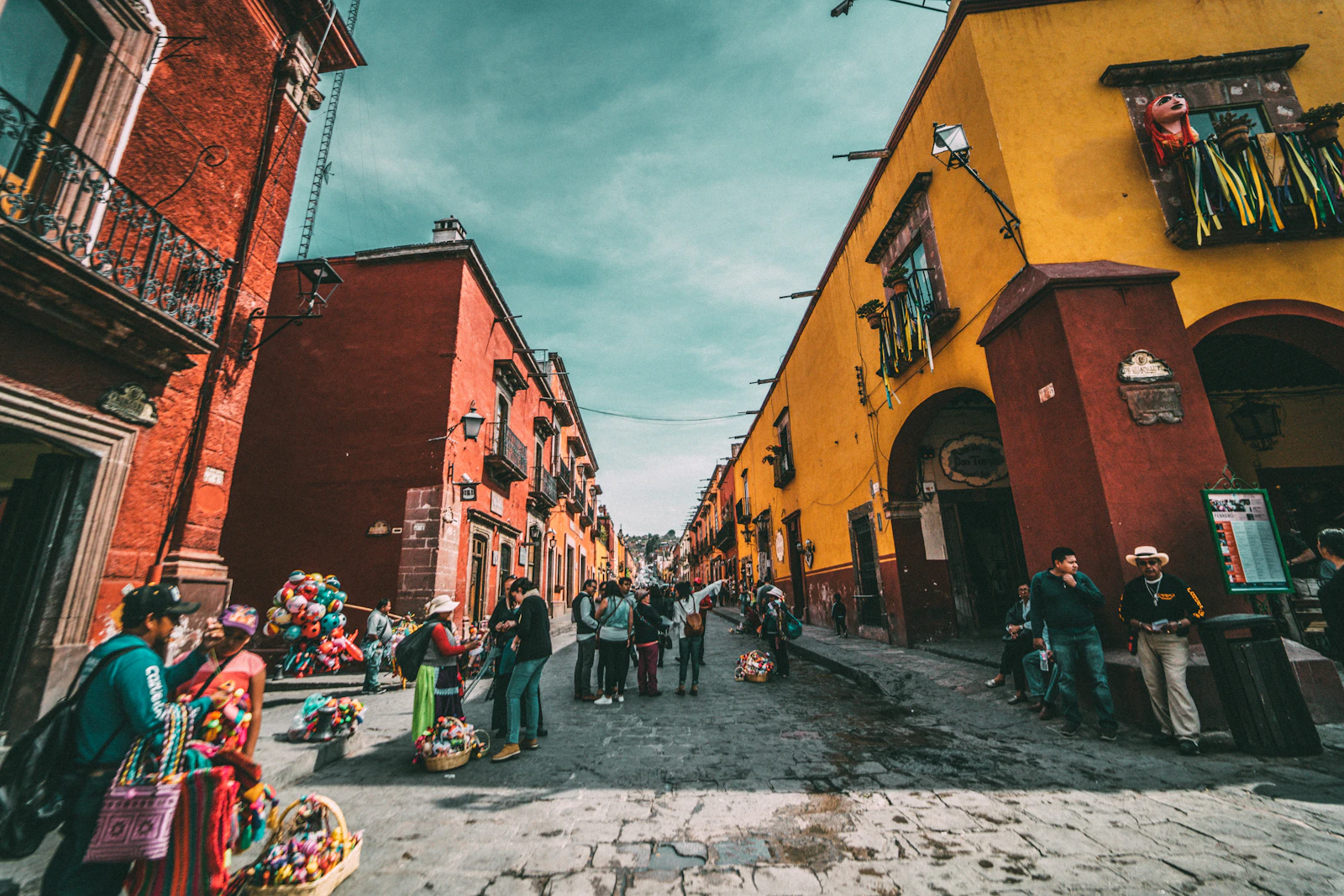
Photo by Carlos Aranda on Unsplash, free to use under the Unsplash License
The catch: CDMX is at 2,240 metres of elevation, and the first three days will flatten you. Sleep is rough, alcohol hits twice as hard, and any cardio feels like cardio plus a backpack of bricks. Air quality on a high-pollution week (usually March–May) will have you coughing. Check IQAir before you commit if you have asthma. The city also isn't walkable in the way Lisbon is walkable. Outside the Roma–Condesa–Juárez triangle you will Uber, and traffic in CDMX can turn a 4 km trip into 45 minutes.
Medellín: What You're Actually Buying
Medellín sells itself on weather, and the weather earns it. The "city of eternal spring" tag is borderline accurate. Daytime highs sit in the 22–26°C band twelve months a year, nights drop to 17–18°C, and the only meaningful weather variation is whether you'll get an afternoon downpour in May or September. You can pack one suitcase for any time of year and not think about it again.
The pitch for Canadian slowmads:
- Pollen-free in winter when Toronto is at -8°C and Vancouver is at 4°C and grey. Walking out of a coworking space at 6pm into 22°C and a sky that hasn't bothered with January is the whole point.
- Lower cost across the board: rent, food, gym, transport, going-out budget. A comparable lifestyle to Roma Norte in El Poblado runs $400–$700 CAD/month less in real terms.
- Time zone of UTC-5 year-round, no DST. That's the same hour as Toronto from November to March and one hour behind from March to November. About as ET-friendly as a non-Canadian time zone gets. For Vancouver (PT) you're 3 hours ahead in winter and 2 hours ahead in summer.
- Nomad density. El Poblado and Laureles have a critical mass of remote workers. Coworking spaces fill, language exchanges run nightly, and you can find a soccer pickup or run club within a week of arriving.
- Visa is generous. Canadians get 90 days on entry; one online or in-person extension at Migración Colombia gets you to 180. Cost is around $35 CAD for the extension.

Photo by Joel Duncan on Unsplash, free to use under the Unsplash License
Browse Medellín apartments on Booking.com, sorted by guest rating
The catch: No direct flights from Canada. You're connecting through Panama City (PTY) on Copa, Bogotá (BOG) on Avianca, Miami (MIA) on American, or doing the YYZ–MEX–MDE Aeromexico route. Total door-to-door from YYZ is 9–13 hours depending on layover. Also: Medellín's safety reputation is not a myth, just outdated. El Poblado and Laureles are about as safe as Toronto's Annex if you act normal, but parts of the city centre and the comunas above the metro should not be your evening stroll. And the food scene, while fine, is several rungs below CDMX. If "where am I eating tonight" is a major weekly variable for you, Medellín underperforms.
Cost Breakdown: 30-Day Budget Side by Side
Both columns are mid-tier "comfortable" budgets: Airbnb in a top neighbourhood, eating out 5–6 nights a week, full-month coworking, one weekend trip. All figures CAD.
| Category | Mexico City (Roma Norte) | Medellín (El Poblado) |
|---|---|---|
| Furnished 1BR (Airbnb, 30 nights) | $1,500 | $1,100 |
| Groceries (cook 2 meals/day) | $300 | $230 |
| Restaurants & street food | $550 | $400 |
| Coworking pass (full month) | $230 | $180 |
| Local transport (Metro + Uber) | $130 | $90 |
| SIM + data (10–15 GB plan) | $30 | $25 |
| Coffee shop work hours | $90 | $70 |
| One weekend trip (Oaxaca / Cartagena) | $400 | $350 |
| Buffer (drinks, gym, fun) | $300 | $250 |
| Total (excl. flight) | $3,530 | $2,695 |
Add the flight: from YYZ, expect $420–$650 CAD return for CDMX and $700–$1,100 CAD return for MDE. From YVR, $480–$780 CAD for CDMX and $750–$1,200 CAD for MDE. Net all-in for a 30-day stay: roughly $4,000 CAD for CDMX from Toronto, roughly $3,600 CAD for Medellín. Medellín wins by about $400. That's a real number, but smaller than the per-night cost gap suggests once you fold in the flight premium.
Internet, Coworking, and Where to Actually Plug In
Both cities have reliable fibre in the right neighbourhoods. The wrong neighbourhood will tank your standup, in either city, so pick carefully.
Mexico City, where it works: Roma Norte and Condesa Airbnbs in buildings under 25 years old typically run 100–300 Mbps fibre on Totalplay or Izzi. Older Porfiriato-era apartments in the same area can be capped at 30 Mbps DSL. Ask for a screenshot of a speed test before you book a long stay. Coworking density is high: WeWork CDMX, Público, U-Co, Selina Cowork, and Homework Coworking give you 8–12 walkable options in Roma–Condesa. Day passes are about $25–$30 CAD. Full-month dedicated desk is $230–$280.
Medellín, where it works: El Poblado and Laureles routinely deliver 100–500 Mbps on Tigo or Claro fibre. Speeds in many El Poblado towers genuinely exceed what most Canadians have at home. Coworking options are concentrated: Selina Medellín, Atom House, Tinkko, and a number of cafe-coworking hybrids in Provenza and Manila. Full-month dedicated desk is $130–$220 CAD.
Browse Mexico City coworking-friendly hotels on Booking.com and browse Medellín coworking-friendly stays on Booking.com.
Time Zone Reality for Canadian Hours
This is the under-discussed part of slowmad life and it matters more than people admit. Both cities are on UTC-6 (CDMX) and UTC-5 (Medellín) year-round, no DST.
| Your Canadian colleagues | 9am their time = local in CDMX | 9am their time = local in MDE |
|---|---|---|
| Toronto / Montreal (EST, winter) | 8am CDMX | 9am MDE |
| Toronto / Montreal (EDT, summer) | 7am CDMX | 8am MDE |
| Calgary (MST, winter) | 9am CDMX | 10am MDE |
| Calgary (MDT, summer) | 8am CDMX | 9am MDE |
| Vancouver (PST, winter) | 11am CDMX | 12pm MDE |
| Vancouver (PDT, summer) | 10am CDMX | 11am MDE |
The cleanest read:
- ET-anchored work (Toronto/Montreal): Medellín is the better fit. You match Toronto exactly in winter and you're only one hour behind in summer, so a 9am Toronto standup is a 9am or 8am call for you. CDMX adds an extra hour of "wake up earlier than your team" from March through November.
- PT-anchored work (Vancouver): CDMX is preferable. A 9am Vancouver call is 11am or 10am for you, leaving real morning blocks before the team comes online. From Medellín that same call is 12pm or 11am, which kills your morning.
- MT-anchored work (Calgary/Edmonton): Roughly a wash. Both cities keep your standups at workable hours.
- AT-anchored work (Halifax): Medellín is two hours behind year-round, CDMX is three hours behind. Either way you're starting later in the local day, but Medellín is the easier pick.
Lifestyle Fit: What You're Choosing Between
Both cities are dense enough to be cities and contained enough to feel like neighbourhoods. The lifestyle difference is real.
Mexico City wants you out at 9pm. The food scene rewards anyone who'll show up for a tasting menu at Pujol or a five-table mezcaleria in Juárez or an empanada window after the late movie at Cineteca Nacional. Weekends are about Oaxaca buses, the Frida Kahlo museum line, the Sunday Reforma bike close-down, art fairs every other Saturday, and a constant stream of new openings. It's a city for people who want input.
Medellín wants you outside. The default weekend is a Sunday on the Las Palmas hillside, a hike at Cerro de las Tres Cruces, a paragliding morning in San Felix, a long lunch in Sabaneta, salsa lessons in Manila, an Atletico Nacional match. The pace is slower. The "eternal spring" makes outdoor activities the default in a way that doesn't really happen in CDMX, where 30°C afternoons in May knock out anyone trying to be outside between noon and 5pm.
If you're choosing between them based on what your evenings look like: CDMX is restaurant-and-mezcal, Medellín is rooftop-and-park.
Getting There and Visas: The Logistics
To Mexico City from Canada: Direct from YYZ on Air Canada and Aeromexico, daily, ~5h. Direct from YVR on Air Canada and Aeromexico, ~5h 30m. Direct from YYC seasonally on WestJet. From YUL, generally a YYZ or US connection. Typical return economy: $420–$650 from YYZ, $480–$780 from YVR.
To Medellín from Canada: No direct routes. Best routings, in rough order of decency:
- YYZ to BOG (Avianca, ~6h 30m), then BOG to MDE (Avianca, ~50m). Total 9–10h door-to-door.
- YYZ to PTY (Copa, ~5h 30m), then PTY to MDE (Copa, ~1h 15m). Copa runs frequently and layovers are short.
- YYZ to MIA (Air Canada or American, ~3h), then MIA to MDE (American or LATAM, ~3h 30m).
- YVR to MEX to MDE on Aeromexico. Slower but a single airline.
Typical return economy: $700–$1,100 from YYZ, $750–$1,200 from YVR. Cheapest months on either route are September, late October, and early February.
Find YYZ→MEX fares on Expedia and find YYZ→MDE fares on Expedia.
Visas, quick version:
- Mexico: 180-day FMM tourist permit issued automatically on arrival for Canadians. Don't lose the slip. You need it on departure.
- Colombia: 90 days on arrival for Canadians (passport-stamped PIP-3). Extend once at Migración Colombia for another 90 days, total 180 per calendar year. Cost is around $35 CAD. You can do the extension online via the Migración Colombia website.
For longer stays, both countries have remote-work / digital nomad visa pathways, but for any stay under 6 months neither is necessary.
How We Compared These Cities
Both rankings are built from Canadian remote-worker budgets collected in 2024–2026 (Roma/Condesa for CDMX, El Poblado/Laureles for Medellín), CPI data via the Bank of the Republic of Colombia and INEGI, fare data tracked from YYZ/YVR over the past 12 months, and direct interviews with five Canadian slowmads who've done 30+ days in each city. Internet speeds reflect Ookla and Speedtest data for the named neighbourhoods, not citywide averages. Currency conversions use ~14 MXN and ~3,000 COP to 1 CAD as of April 2026.
We weighted four criteria roughly equally: total cost, ease of getting there from Canada, work-week practicality (time zone plus internet), and lifestyle quality. We deliberately did not weight Instagrammability or "vibe."
Frequently Asked Questions
Is Medellín cheaper than Mexico City for Canadian remote workers? Yes, by roughly 25% on most categories (rent, food, transport, coworking). On a 30-day comfortable budget, you'll spend about $3,500 CAD in CDMX vs. $2,700 CAD in Medellín, before flights. The flight premium for Medellín ($300–$450 CAD more) eats some but not all of that saving. Net all-in, Medellín runs $300–$500 CAD cheaper per month from Toronto.
Do Canadians need a visa for Mexico or Colombia for remote work? No, not for stays up to 180 days in either country. Mexico issues a 180-day FMM tourist permit on arrival. Colombia gives Canadians 90 days on arrival, extendable once for another 90 days at Migración Colombia (about $35 CAD). Working remotely on a tourist permit is a grey area in both countries; in practice, Canadian remote workers earning from Canadian clients on Canadian payroll are not pursued.
Which city has better internet for video calls? Both are reliable in the right neighbourhoods. Medellín's El Poblado and Laureles routinely deliver 100–500 Mbps fibre on Tigo or Claro, often faster than what most Canadians have at home. Mexico City's Roma Norte and Condesa Airbnbs in newer buildings get 100–300 Mbps on Totalplay or Izzi, but older apartment buildings can be capped at 30 Mbps DSL. Always ask for a recent speed-test screenshot before booking a 30-day stay.
What's the time zone difference for working with Canadian colleagues? Mexico City is on UTC-6 year-round, no DST. That's one hour behind Toronto in winter and two hours behind in summer. Medellín is on UTC-5 year-round, no DST. Same as Toronto in winter and one hour behind in summer. For Toronto/Montreal-anchored work, Medellín is the easier fit (your 9am standups stay at 8–9am locally). For Vancouver-anchored work, CDMX is preferable. A 9am PT call is 10–11am for you, leaving real morning hours before the team logs on.
Can I get a direct flight from Canada to either city? Mexico City yes. Air Canada and Aeromexico fly daily nonstop from YYZ (~5h) and YVR (~5h 30m), and WestJet runs seasonal direct from YYC. Medellín no. Every routing from Canada connects through Panama City (Copa), Bogotá (Avianca), Miami (American), or Mexico City (Aeromexico). Total transit time to Medellín is 9–13 hours.
Which city is safer for a Canadian solo remote worker? Both are safe in the neighbourhoods you'll actually live in. Roma Norte, Condesa, and Polanco in CDMX, and El Poblado, Laureles, and Envigado in Medellín, are about as safe as the Annex in Toronto or Mount Pleasant in Vancouver. Default-on caution applies in both: don't flash a phone in a taxi, use Uber not flagged street cabs at night, and skip the city centre after dark in either city. Petty theft is more common than violent incidents in both.
Is the food scene really that different? Yes, materially. Mexico City is one of the top three food cities in the Western hemisphere. The depth of regional cuisines, the price range, and the volume of new openings is exceptional, and that's coming from a Canadian who's eaten in most major Latin American capitals. Medellín's food scene is fine but several rungs below: Provenza has the trendy openings, Sabaneta and Envigado have the good bandeja paisa spots, but you don't go to Medellín for the food. You go for the weather and the cost.
Which is better for a first-time slowmad trip from Canada? Mexico City. The direct flight, density of services, and English-friendly coworking make it the lower-friction pick for a first 30-day trip. Medellín is slightly better for stay number two or three, when you've worked out your remote-work routine and want to optimize for weather and cost rather than convenience.
Current Deals from Canada to Mexico City and Medellín
Live deal alerts for YYZ, YVR, YUL, and YYC are tracked on the FareNorth deals page. Sign up for the email list to get notified when fares drop on either route. Cheapest months historically have been September, late October, and early February for both destinations.
See current Canada→Mexico City and Canada→Medellín fares on the FareNorth deals page
FareNorth earns a commission on bookings made through links on this page, at no extra cost to you.